
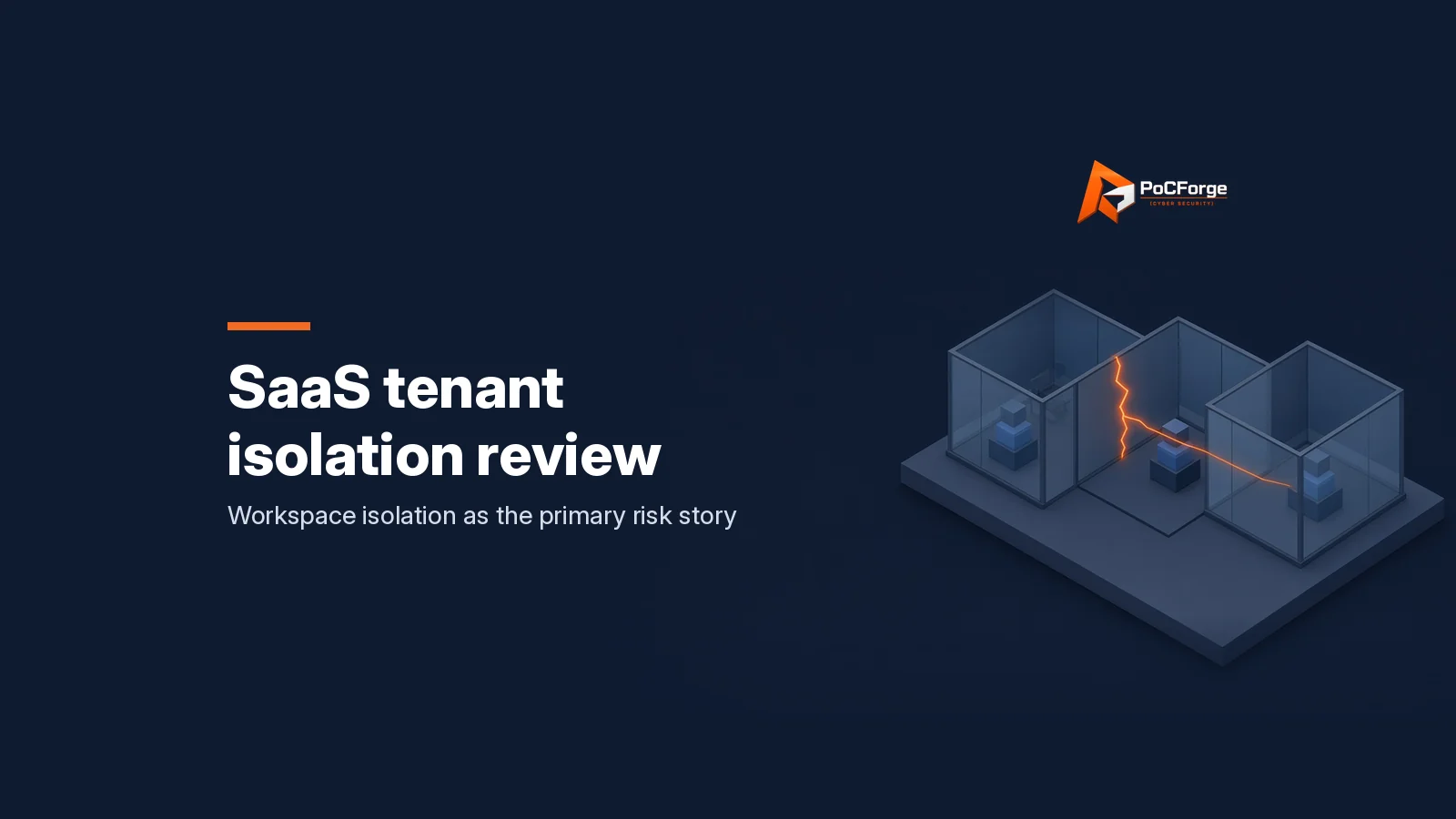
SaaS tenant isolation review
Anonymised pattern: multi-tenant B2B SaaS preparing for enterprise security questionnaires — with workspace isolation as the primary risk story.
At a glance
-
SectorMulti-tenant B2B SaaS
-
SurfacesWeb app + authenticated APIs
-
Duration classFocused web+API window
-
RetestScheduled priority retest
Context
A product team needed web and API testing before a set of enterprise deals. Primary concern: whether users in one workspace could read or modify another tenant’s data through IDOR-style access, invitation flows or admin workflow confusion. Staging mirrored production authorisation models. The buyer needed a report suitable for customer security questionnaires — not a raw scanner dump.
Empanelment was not a contractual requirement; evidence quality and retest closure were. That matches many India SaaS buyers described on our SOC 2 / ISO VAPT guide and commercial page for VAPT services in India.
Engagement shape
Typical shape for this pattern: a focused web+API assessment over a defined feature set (workspaces, members, shared objects, billing-adjacent reads), two to three authenticated role families, and a fixed retest window after priority fixes. Scope excluded destructive production testing and third-party IdP hardening beyond how the app consumed assertions.
Kick-off clarified success criteria: “can a neighbour tenant reach our data?” mattered more than a long list of low-impact header findings. That clarity is exactly what our VAPT RFQ checklist pushes buyers to write down early.
Approach
Read the steps as text
-
Step 1
Discover
Map workspaces, roles and object types that carry tenant boundaries.
-
Step 2
Validate
Authenticated role testing and cross-tenant identifier checks on UI and API.
-
Step 3
Prove
Evidence unauthorised read/write capability in staging — no production destruction.
-
Step 4
Remediate
Server-side tenant binding, invitation hygiene, export predicates.
-
Step 5
Retest
Confirm priority isolation findings closed; residual items owned.
Finding classes (illustrative)
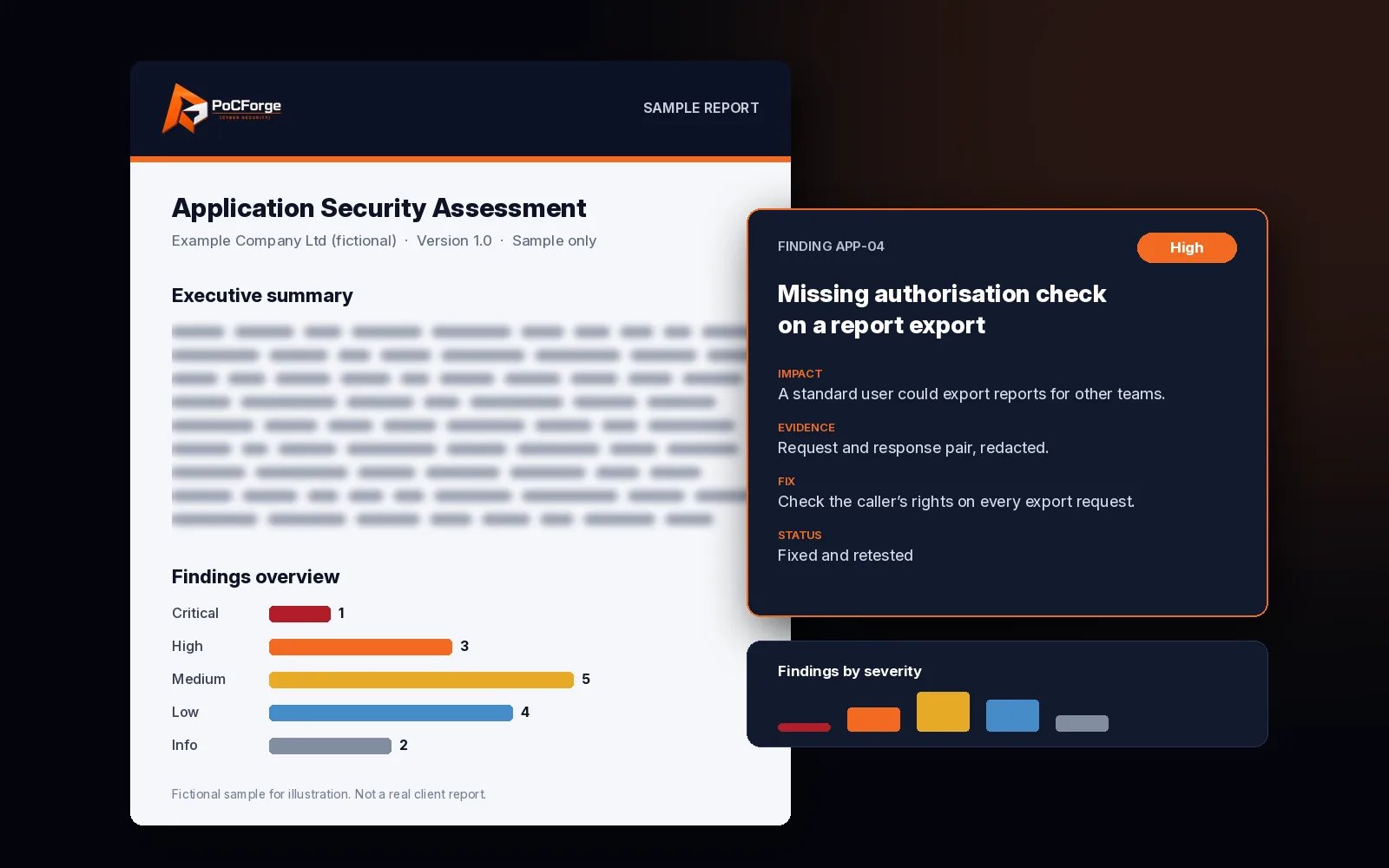
Without disclosing exploit detail: cross-tenant object access via predictable identifiers; privilege confusion where UI hid actions the API still accepted; invitation tokens that broadened access beyond the intended seat; export jobs that assumed UI filters equalled server-side tenant filters. Severity was framed by data sensitivity and whether an ordinary authenticated user could reach another tenant’s records.
The useful artefact for buyers was a prioritised list with reproduction steps engineering could run.
Outcomes and remediation pattern
Engineering prioritised server-side tenant binding on every sensitive object route, tightened invitation token lifetime and aligned API authorisation with UI role matrices. Export and reporting paths gained explicit tenant predicates. A remediation retest confirmed closure of the agreed priority findings and left residual lower-priority items with clear owners. Leadership received an executive summary usable in questionnaire responses.
Exact logos and confidential payloads are withheld. If your multi-tenant model needs a similar shape, start with web VAPT India, API security testing India, or a combined programme via VAPT services.
Lessons for buyers
- Ask vendors how they will test tenant binding, not only OWASP Top 10 labels.
- Require API coverage whenever the UI is a thin client.
- Budget a retest — questionnaire reviewers increasingly ask whether fixes were verified.
- If CERT-In empanelment is not required, say so; buy evidence quality instead. See the CERT-In guide.
Why this pattern shows up in India SaaS deals
Enterprise questionnaires in India and globally increasingly ask how multi-tenant isolation is tested — not only whether a vulnerability scan was run. Buyers who arrive through VAPT India searches often need a narrative they can reuse with customers: what was in scope, what class of issues mattered, and whether fixes were retested. Pair this write-up with web application pentesting India when isolation is primarily an application concern, or with desktop India when an Electron client also stores tenant context locally.
