
Network and Active Directory penetration testing in India
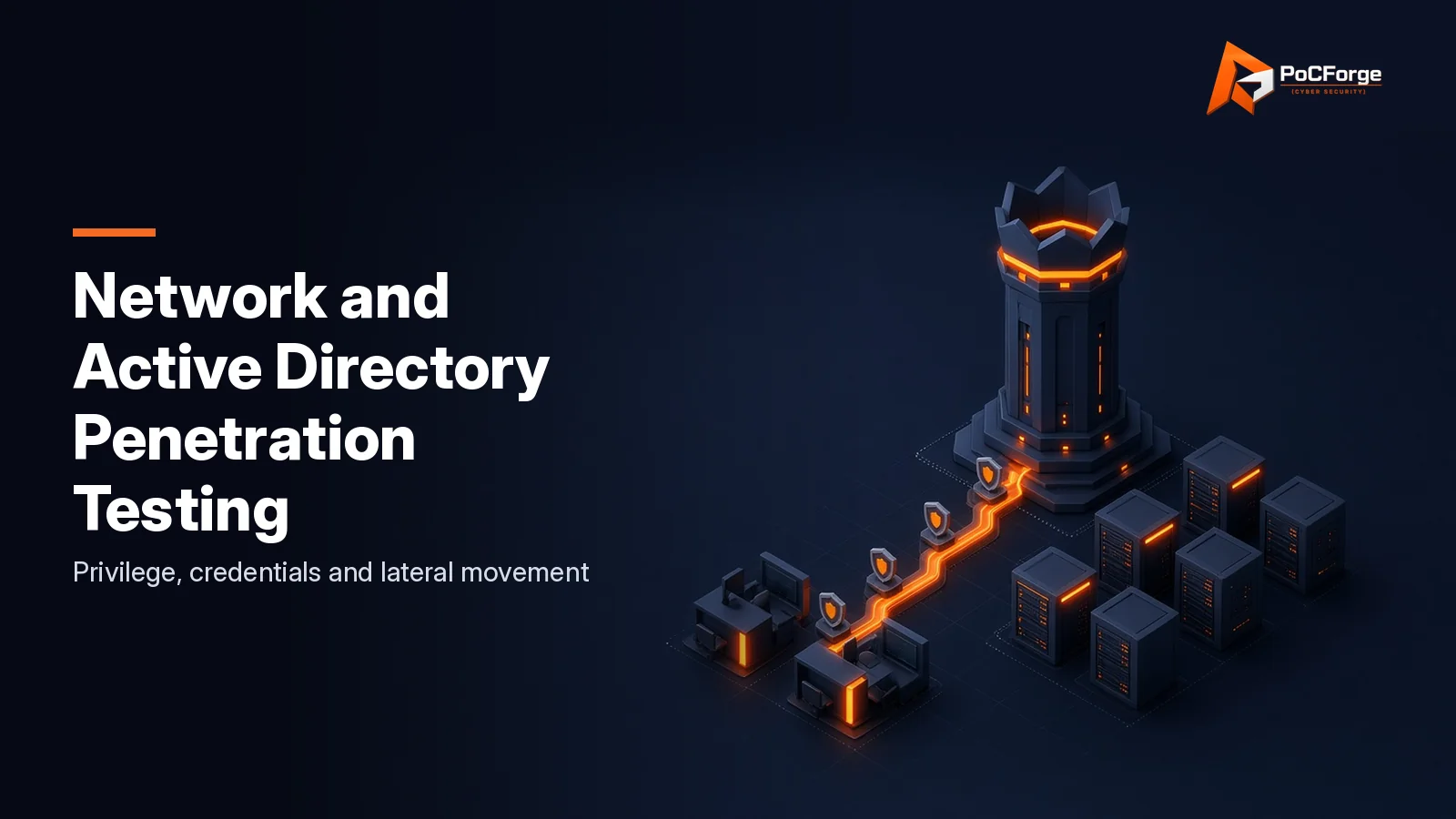
Identify exploitable weaknesses across internal networks, Windows environments and Active Directory — including privilege escalation and lateral-movement paths — with evidence your IT and security teams can act on.
-
₹55,000 – ₹1,35,000Indicative India band, + GST
-
Scope-based quoteConfirmed during scoping
-
Retest includedIn-scope fixes checked again
-
Remote deliveryFor India-market and international teams
-
Privilege escalation
Paths from standard user or foothold to higher privileges inside Windows and Active Directory environments.
-
Lateral movement
How an attacker could move between hosts and trusts once inside the agreed network scope.
-
Identity hardening outcomes
Findings tied to concrete directory and host controls your IT and security teams can remediate.
Network and Active Directory pentesting for India-based organisations
Internal network and Active Directory (AD) testing answers a different question from external perimeter work: if an attacker or malicious insider obtains a foothold, what can they reach? For Indian enterprises and product companies running on-premises Windows domains, hybrid identity, or office networks that still matter to production access, this engagement type is often the highest-signal security investment after application testing.
PoCForge runs scoped, human-led internal network and AD-focused penetration testing with clear rules of engagement. Indicative pricing appears on our India cost guide.
What we typically test
- Domain user privilege escalation paths
- Misconfigured ACLs, delegation and trust relationships in scope
- Credential exposure and reuse patterns discoverable in the agreed environment
- Lateral movement between hosts and segments in scope
- Common Windows service weaknesses that enable escalation
- Hybrid identity touchpoints when Azure AD / Entra ID is in scope
- Segmentation assumptions between user, server and management networks
Techniques and tooling are agreed up front. We do not run unbounded destructive tests; denial-of-service and domain-wide outages are out of scope unless explicitly contracted (and usually refused).
Indicative India pricing
Published internal / Active Directory band: ₹55,000 – ₹1,35,000 + GST. Multi-site, multi-domain or long-duration programmes are higher. Quotes always follow a workshop — internal testing cannot be priced accurately from a one-line email.
Deliverables
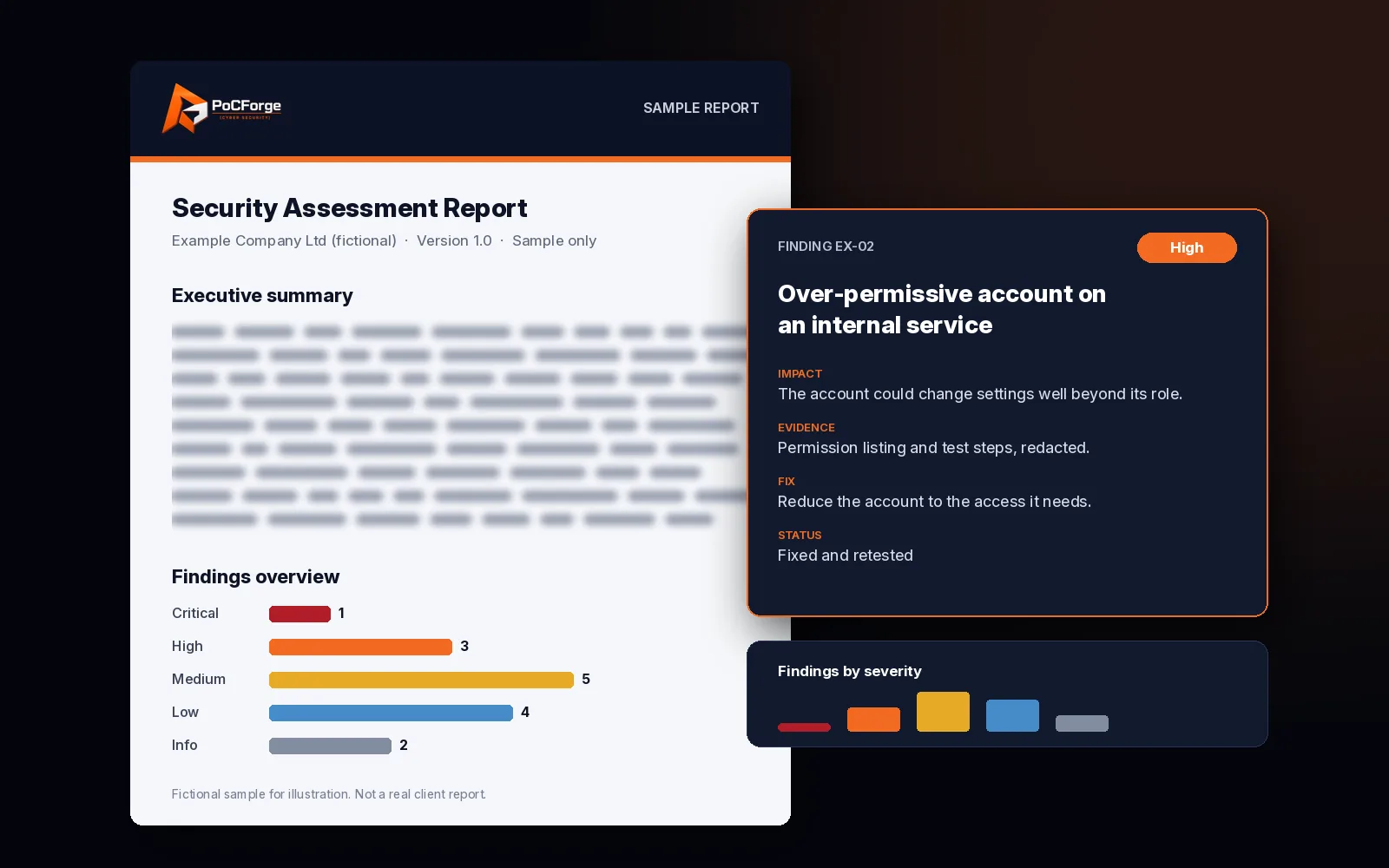
- Executive narrative of achievable impact from the agreed starting point
- Technical findings with reproduction and remediation guidance
- Prioritised hardening themes for identity and segmentation
- Retest notes for agreed fixed items
Assumed breach vs pure external
Many useful AD programmes start from an assumed breach position — a standard domain user or a segmented network foothold — because that matches modern threat reality better than pretending the perimeter is perfect. External-only testing remains valuable; it simply answers a different question. Pair with external infrastructure testing in India when both stories matter to leadership.
Buyer checklist
- Domain count and hybrid identity details
- Starting access level (user, VLAN, jump host)
- In-scope hosts vs forbidden systems (OT, payment switches, etc.)
- Change freezes and business-critical windows
- Whether the goal is domain admin, specific data access, or control validation
Procurement and CERT-In notes
Some regulated Indian buyers require CERT-In empanelled assessors for contractual reasons. Empanelment is a procurement constraint, not a guarantee of depth. Verify the official list for your legal entity needs and read Do you need CERT-In empanelled VAPT?
Typical India AD scenarios
Growing company with a long-lived domain. Years of accumulated service accounts, legacy protocols and flat network trust. The engagement validates which of those debts are actually exploitable from an agreed start point.
Hybrid identity rollout. Sync and federation introduce new paths. Scope should state whether cloud identity is in or out.
Before an enterprise customer audit. Leadership wants a clear story: what an attacker with a laptop foothold could reach, and what was fixed afterward.
Coordination with IT operations
Internal testing succeeds when IT and security share a channel for urgent escalation, know which hosts are fragile, and agree how credential material will be handled after the engagement. We document handling expectations in the statement of work.
Measuring success
Success is not “we got domain admin in twenty minutes” as a marketing line. Success is a clear map of realistic paths from the agreed starting point, a prioritised remediation plan your IT team can execute, and verified closure of the issues you chose to fix. Some environments are already well hardened; a short engagement that finds little of high impact can still be valuable if it documents residual risk clearly.
Severity reflects real conditions: if a path requires conditions you have already mitigated, we say so.
Deliverables checklist
- Narrative of achievable impact from the agreed start point
- Technical findings with safe reproduction detail
- Hardening themes for identity, hosts and segmentation
- Retest notes for agreed remediations
Why choose a boutique over a checklist factory
Large delivery factories can be the right fit for some procurement programmes. Boutique testing suits product companies that want senior attention on their specific architecture, clearer writing, and careful scoping. PoCForge is intentionally small: we publish prices, decline work that is a poor fit, and focus on validated impact. If you need a global brand stamp more than depth, say so — we would rather redirect you than oversell.
Working with PoCForge remote
Most engagements are remote across India and international time zones. We agree testing windows, communication channels and escalation contacts up front. You receive written findings you can share with engineering and, where appropriate, customer security reviewers. For programme planning across multiple surfaces, start with VAPT services in India and the 2026 cost guide.
Related programme options
Internal testing pairs naturally with external infrastructure and application VAPT under VAPT services in India. For budgeting, use the 2026 cost guide and the pricing page, then request a scoped statement of work.
Frequently asked questions
How much does Active Directory pentesting cost in India?
PoCForge’s indicative internal/AD range is ₹55,000–₹1,35,000 + GST. Multi-domain or multi-site programmes are quoted higher after scoping.
Do you need domain admin credentials to start?
No — many programmes start as a standard user or from a network foothold. Starting privileges are defined in the statement of work.
Will testing break production?
We design for safety and agree blackout rules. Destructive techniques and DoS are excluded unless explicitly authorised (and usually avoided).
Can you test hybrid Azure AD / Entra ID?
Yes when hybrid components are listed in scope and appropriate access is provided.
How long does an internal engagement take?
Often one to several weeks including reporting, depending on network size and objectives. Timeline is confirmed in scoping.
Is this suitable for ISO 27001 evidence?
As evidence of internal testing with a clear report — yes. Certification bodies remain independent.
Related PoCForge guides
Need a scope-based estimate?
Share your application, infrastructure or security requirement and PoCForge will help define the right assessment.
