
External perimeter hardening
Anonymised pattern: organisation with public cloud edge, VPN and assorted internet-facing services — inventory confidence before a deeper application test.

At a glance
-
SectorEnterprise / internet-facing estate
-
SurfacesExternal hosts, mail auth, edge services
-
Duration classPerimeter discovery + validate
-
RetestExposure closure check
Context
Leadership wanted confidence that the internet perimeter matched the asset inventory — and that exposed services were not offering easy footholds before a broader application assessment. Scope covered agreed domains and IP ranges in a cloud-hosted estate, plus email authentication posture for primary sending domains.
This pattern often precedes a web/API VAPT. See external infrastructure pentesting India and the programme view on VAPT services in India.
Engagement shape
Time-boxed external assessment against an allowlisted set of domains/CIDRs, non-destructive by default, with optional light credentialed checks only where explicitly authorised. Deliverable emphasised inventory deltas and exploitable footholds over exhaustive CVE laundry lists.
Approach
Read the steps as text
-
Step 1
Discover
Build internet-facing inventory and mail-auth posture view.
-
Step 2
Validate
Confirm risky exposures that matter before deeper app testing.
-
Step 3
Prove
Evidence exposure classes without unnecessary disruption.
-
Step 4
Remediate
Close inventory gaps, reduce exposure, improve email-auth posture.
-
Step 5
Retest
Verify agreed exposures closed ahead of application testing.
Finding classes (illustrative)
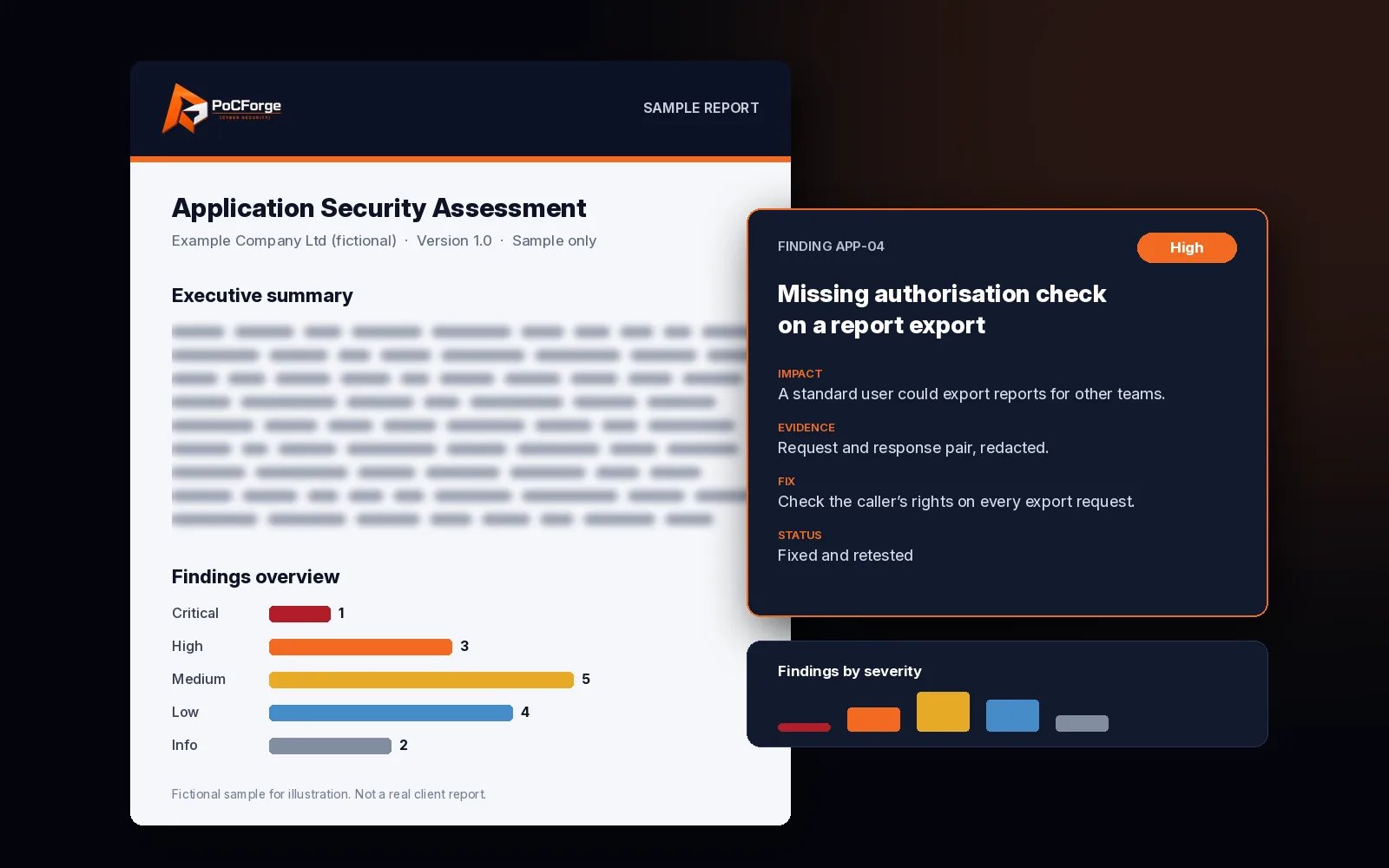
Hosts missing from the internal CMDB; a legacy admin interface reachable without the expected network control; email authentication gaps that weakened phishing resistance; staging labels still attached to internet listeners. Findings were evidenced against the agreed scope.
Outcomes and remediation pattern
The organisation decommissioned or firewalled unexpected exposures, corrected inventory ownership and improved DMARC enforcement stepwise. A short retest confirmed the priority perimeter items were addressed, clearing the path for a subsequent web/API engagement. This “perimeter then product” sequence is common in India VAPT programmes.
For budgeting the follow-on application work, use the cost guide and RFQ checklist.
Lessons for buyers
- Give vendors an authoritative inventory — and expect them to challenge it.
- Treat email authentication as part of perimeter hygiene, not an afterthought.
- Do not skip retest if you will cite the assessment in customer reviews.
- Pair perimeter work with product testing when SaaS authz is the real business risk — see web India and VAPT India hub.
Why perimeter-first still helps product teams
Application testing on a messy perimeter wastes time debating whether a finding is “in scope” or an unknown shadow asset. A short external pass creates a shared inventory and removes obvious footholds so the subsequent web/API engagement stays focused on authorisation and business logic. That sequencing is a practical buying pattern for India teams comparing quotes on the cost guide and assembling RFQs with the checklist.
What we handed back
The report listed inventory deltas, exposure classes and email-auth gaps with evidence, then a short retest note on what was closed. It was written so a later web or API assessment could start from a cleaner perimeter. For programme design see VAPT services in India and the VAPT India hub. Pricing context stays on the 2026 cost guide — indicative, scope-based, and not a race below sustainable delivery.
