
Mobile app security testing in India (Android & iOS)
Penetration testing for mobile clients and the API-backed flows they call — storage, transport, authentication and authorisation — with validated findings and a remediation retest. Aimed at Indian product teams shipping real user apps.
-
₹35,000 – ₹80,000Indicative India band, + GST
-
Scope-based quoteConfirmed during scoping
-
Retest includedIn-scope fixes checked again
-
Android & iOS clients
Client-side storage, transport security, local secrets handling and UI-adjacent risks that affect real devices and builds.
-
API-backed flows
Mobile apps live or die by their backends — we test the authenticated API paths your apps actually call.
-
Release-ready evidence
Findings with reproduction detail, impact and remediation guidance your mobile and backend teams can share.
Mobile application penetration testing for India-market products
Consumer and B2B apps built in India increasingly carry authentication, payments-adjacent flows, offline caches and privileged admin features. A useful mobile assessment looks beyond a store-compliance checklist: it examines how the client stores and transmits data, how certificate pinning and transport controls behave, and — critically — how the supporting APIs enforce authorisation.
PoCForge provides human-led mobile application penetration testing for Android and iOS scopes, typically paired with API testing when the same backends serve web and mobile clients. Indicative India pricing is published on our cost guide.
What we typically test
- Local data storage and sensitive information on device
- Transport security and certificate / pinning behaviour (within agreed methods)
- Authentication and session handling on the client
- Deep links, URL handlers and inter-app communication risks in scope
- Binary / configuration hygiene issues that create practical exploit paths
- API calls made by the app — authorisation, data exposure and logic abuse
- Role differences between customer, partner and admin app builds when provided
Exact techniques depend on platform, build type (debug vs release), and whether you provide accounts, source samples or instrumentation access. We agree methods in the rules of engagement.
Indicative India pricing
Published mobile range: ₹35,000 – ₹80,000 per platform + GST. Application bundles that combine web, API and mobile commonly land in higher bands — see penetration testing cost in India 2026. Use the starting prices for a quick build-up, then confirm with a scope review.
Deliverables
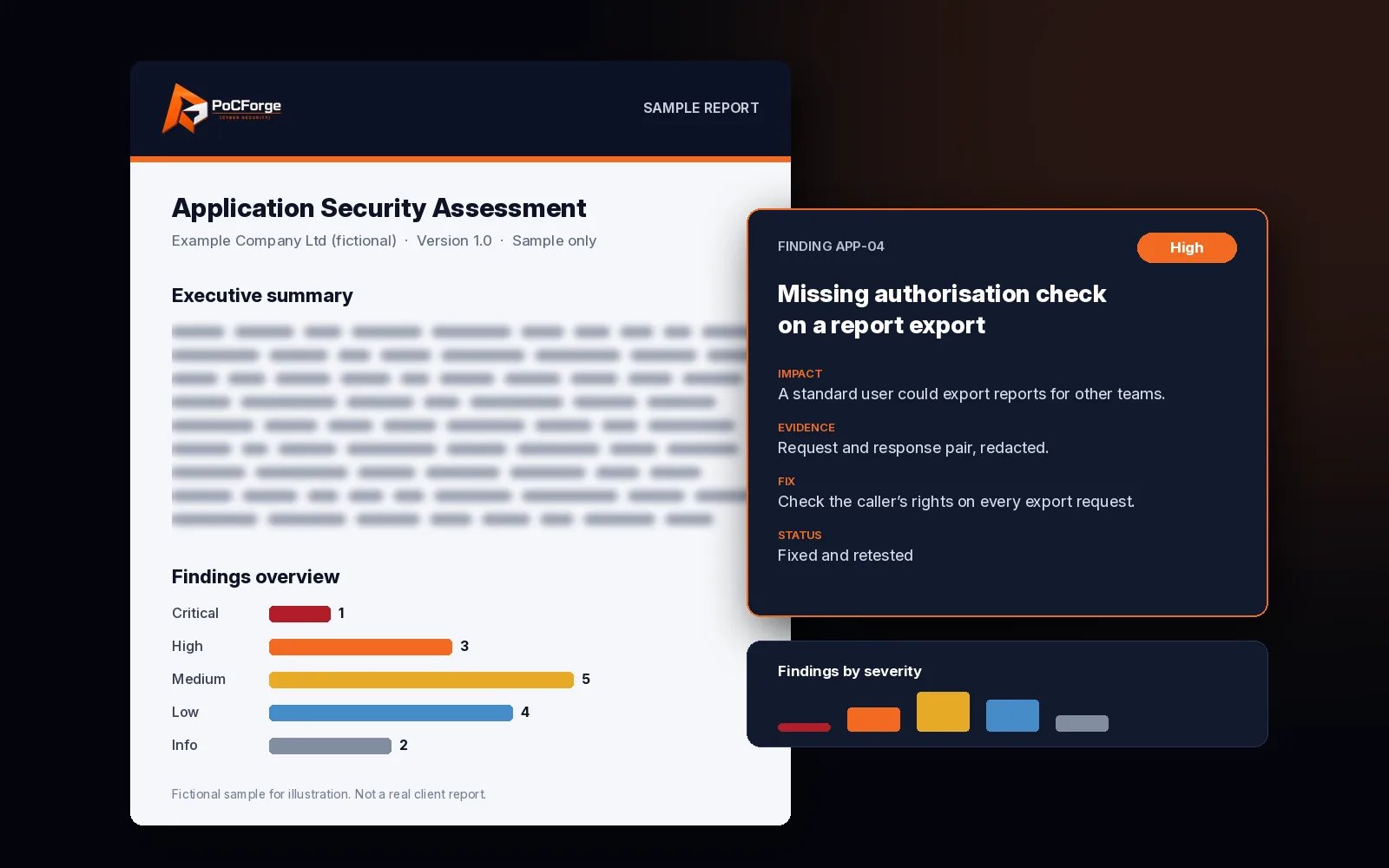
- Executive summary for leadership and customer security packs
- Technical findings with platform context and reproduction steps
- Remediation guidance for mobile and backend owners
- Retest notes for fixed in-scope issues
Client testing without ignoring the API
Many “mobile-only” scanner reports miss the issues that actually lead to account takeover or tenant data exposure — those live in the API. PoCForge prefers scopes that include the mobile client and the authenticated API surface the app uses. See also API security testing in India and the canonical mobile application penetration testing page.
Who this is for
Good fit: product companies shipping Android/iOS apps to Indian or international users; teams preparing for enterprise security reviews; startups that need clear evidence for customer questionnaires.
May need a different procurement path: regulated programmes that contractually require a CERT-In empanelled auditor — verify the official list and read our CERT-In decision guide.
Typical India mobile scenarios
B2B SaaS companion app. Enterprise customers ask whether mobile sessions and cached data are safe on shared devices. Testing focuses on local storage, logout/revocation and API authorisation for the same tenants used on web.
Consumer app before a major release. Teams want a focused pass on authentication, deep links and the highest-value API flows before store submission or a marketing push.
Fintech-adjacent product. Even when payments are handled by a provider, session handling, device binding assumptions and data exports still deserve adversarial review. Scope carefully; we will not over-claim coverage of systems outside your control.
Buyer checklist for mobile scopes
- Platforms (Android, iOS, or both) and distribution channel
- Build type you can supply (release, internal, debug) and signing constraints
- Whether rooted/jailbroken device testing is authorised
- Test accounts across roles and tenants
- Whether the same API is already covered under a web+API engagement
- Any third-party SDKs that handle auth or sensitive data
What we intentionally avoid claiming
We do not promise “zero vulnerabilities”, unlimited retests, or coverage of every SDK dependency on earth. Physical device theft scenarios, advanced hardware attacks and unbounded source-code audits are out of scope unless explicitly agreed. Clear boundaries make reports more useful.
How mobile findings should be prioritised
Prioritise issues that enable account takeover, access to other users’ data, long-lived credential theft from device storage, or trivial bypass of client-side-only controls that the API fails to enforce. Cosmetic hardening notes still help, but they should not drown the report. Ask vendors how they triage — “count of findings” is a weak quality metric.
Working with mobile and backend teams together
Mobile findings often require coordinated fixes: client storage changes plus API authorisation hardening. We structure reports so owners are obvious, and we encourage joint triage calls when both teams attend. That reduces the common failure mode where a client “fix” leaves the API still wide open.
Why choose a boutique over a checklist factory
Large delivery factories can be the right fit for some procurement programmes. Boutique testing suits product companies that want senior attention on their specific architecture, clearer writing, and careful scoping. PoCForge is intentionally small: we publish prices, decline work that is a poor fit, and focus on validated impact. If you need a global brand stamp more than depth, say so — we would rather redirect you than oversell.
Frequently asked questions
How much does mobile app security testing cost in India?
PoCForge’s indicative range is ₹35,000–₹80,000 per platform + GST, depending on app complexity, build access and whether API testing is included.
Do you test both Android and iOS?
Yes. Each platform is typically scoped separately because tooling, builds and local storage behaviour differ.
Is API testing included with mobile testing?
Often yes when the same backends are in scope — and we recommend it. Pure client-only scopes are possible but usually incomplete for SaaS risk.
Do you need source code?
Not always. Source or debug builds can deepen certain checks; release builds with test accounts are a common starting point. We confirm during scoping.
How long does testing take?
A single-platform focused scope often completes in days to a couple of weeks including reporting. Dual-platform plus API programmes take longer.
Can this support SOC 2 or ISO evidence needs?
Yes — as evidence of testing with a clear report. We do not sell certification itself; auditors remain independent.
Related PoCForge guides
Need a scope-based estimate?
Share your application, infrastructure or security requirement and PoCForge will help define the right assessment.
